Guide
Antibes & Juan-les-Pins local guide
Beaches, markets day by day, the hilltop villages inland and how to get around without a car. What we wish we had known when we arrived.
Where to swim around Cap d’Antibes?
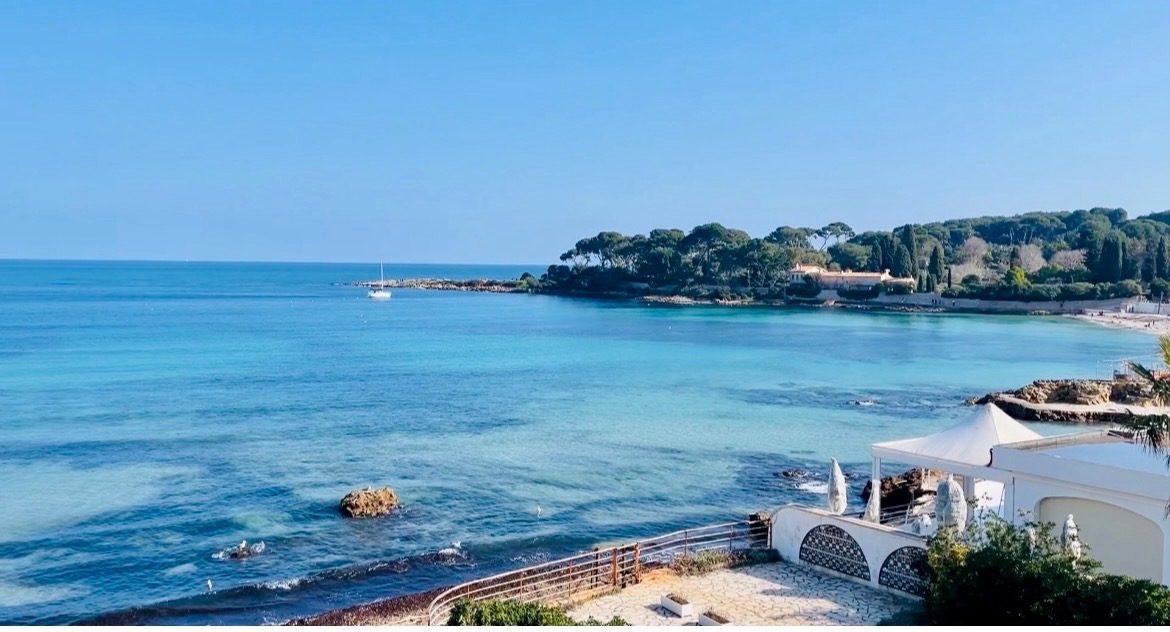
Garoupe beach is the best known on Cap d’Antibes. Fine sand, clear water, and a free public stretch alongside the private beach clubs. It is a five-minute walk from Cap d’Antibes Paradise.
Salis beach, between the cape and the old town, is longer and more family-friendly. You can walk there from the centre of Antibes.
In Juan-les-Pins, the beach is at the foot of the building for both Palais Juan and Brin d’Azur. Public and private beaches follow one another along the bay.
Les Ondes beach, on the other side of the cape, is the quietest of the three. Sheltered from the east wind, the water shelves gently: this is the one to choose with young children.
The coastal path runs right around Cap d’Antibes at the water’s edge. Allow two hours, with coves to swim in along the way. Wear closed shoes: the path is rocky in places.
What to do in Antibes with children?
The Provençal market on cours Masséna, in the old town of Antibes, is held every morning under a covered hall. Fruit, vegetables, flowers, socca and local produce. Come early — it is far more pleasant before the coaches arrive.
The Picasso Museum occupies the Château Grimaldi, facing the sea. The painter worked there in 1946 and left part of his work behind. The visit is short and suits children well.
The Fort Carré overlooks Port Vauban. Parking there is free, and the old town is ten minutes away on foot — useful in high season, when finding a space becomes a sport.
The ramparts of Antibes can be walked from the port to Salis beach, with the sea on one side and the old town on the other.
Where to go out in the evening in Juan-les-Pins?
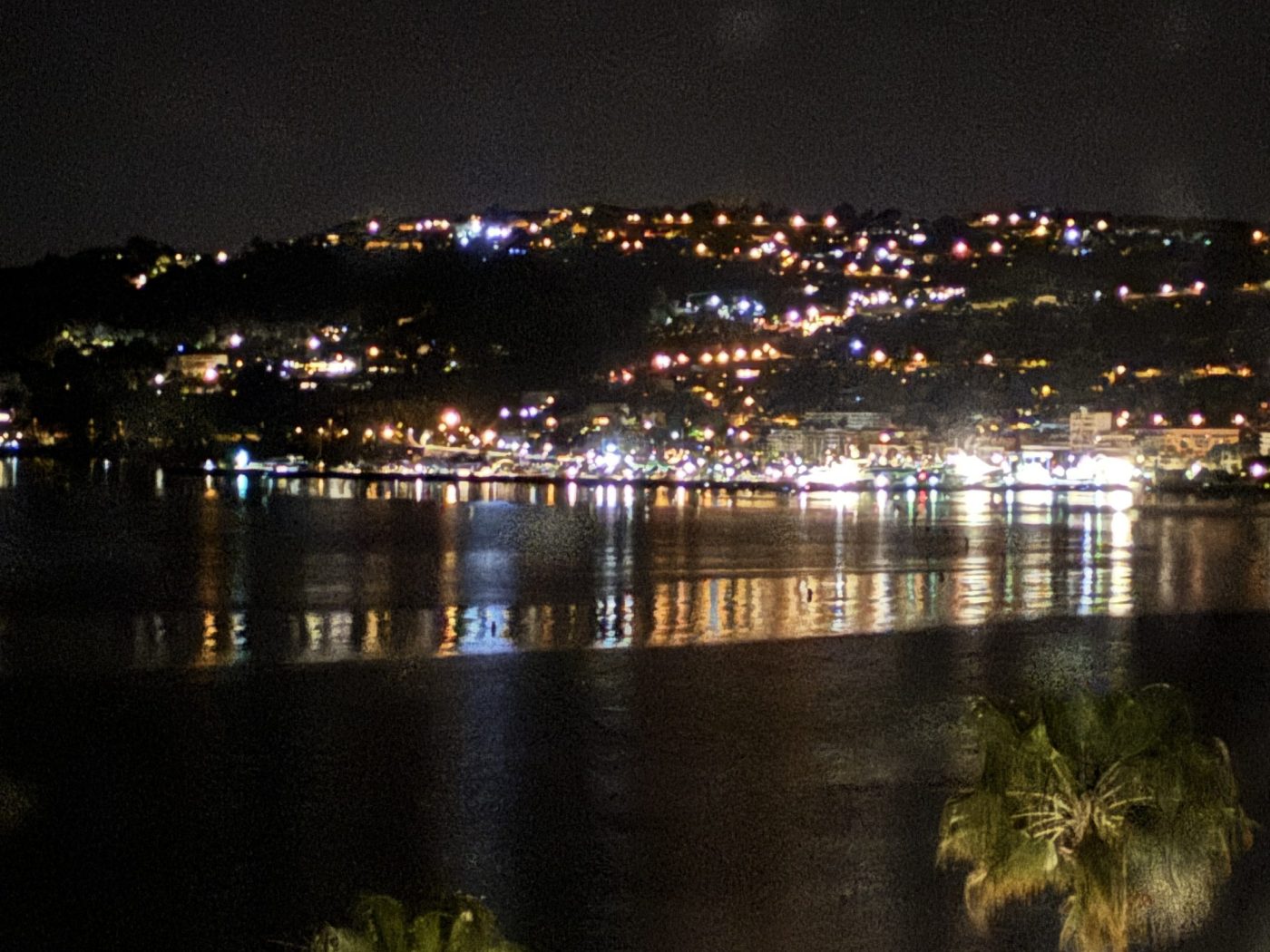
Juan-les-Pins comes alive at night, particularly in July and August. The bars and restaurants along the seafront and around the Pinède stay open late.
The Jazz à Juan festival takes place every summer in the Pinède Gould, a few minutes on foot from Palais Juan and Brin d’Azur. It is one of the oldest jazz festivals in Europe.
For a quieter evening, Old Antibes is ten minutes away by car: its narrow streets are lined with restaurants where you can dine without music.
How do you get around without a car?
From Juan-les-Pins, a car is unnecessary. The beach, the shops, the restaurants and the station are all within walking distance of both Palais Juan and Brin d’Azur.
Juan-les-Pins station is on the coastal line: Antibes in 3 minutes, Cannes in 15, Nice in 30. In summer that is often faster than the road.
From Cap d’Antibes, you can get around on foot, by bicycle, by electric buggy or by bus. Street parking is free outside Cap d’Antibes Paradise.
Nice airport is around twenty minutes away. We can arrange a transfer with a driver — just ask before you arrive.
When is the best time to come?
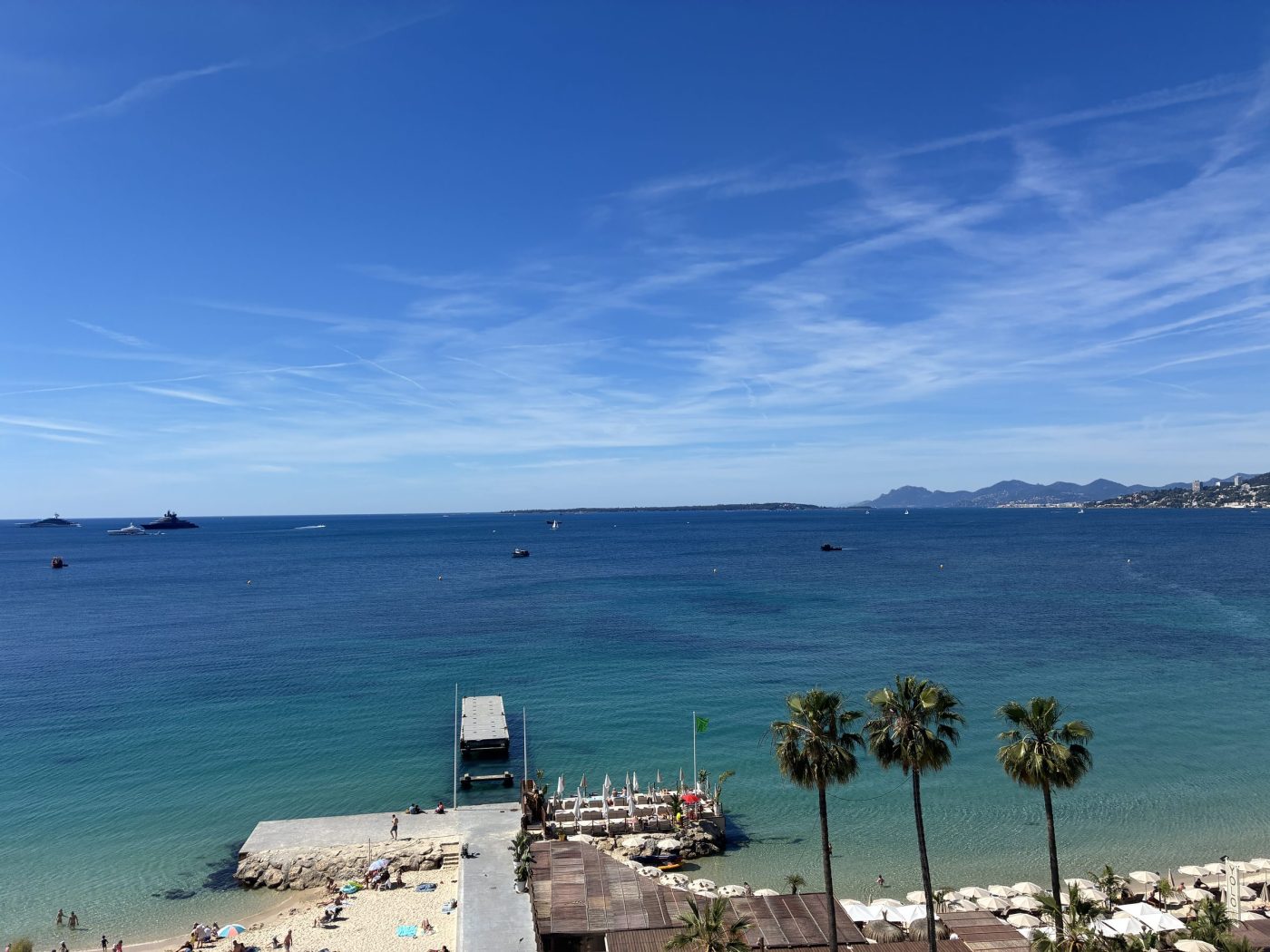
July and August are the busiest and the hottest months. This is the season of the jazz festival, full beaches and late evenings.
May, June and September offer warm water, open terraces and far fewer people. They are our favourite months.
Spring and autumn suit those who come to walk: the coastal path can be done without suffering in the heat, and the light is at its best.
Antibes also sits beside major professional events that fill the Riviera: the Cannes Film Festival in May, Cannes Lions in June, MIPIM in the spring. Book early for those weeks.
Where to shop when you arrive?
For fresh produce, the cours Masséna market in Antibes remains the best place to start. In Juan-les-Pins, everything is within walking distance of both Palais Juan and Brin d’Azur: bakery, grocery and fishmonger are a few minutes away. For a late arrival or a longer stay, the supermarkets are on the edge of Antibes, a few minutes by car.
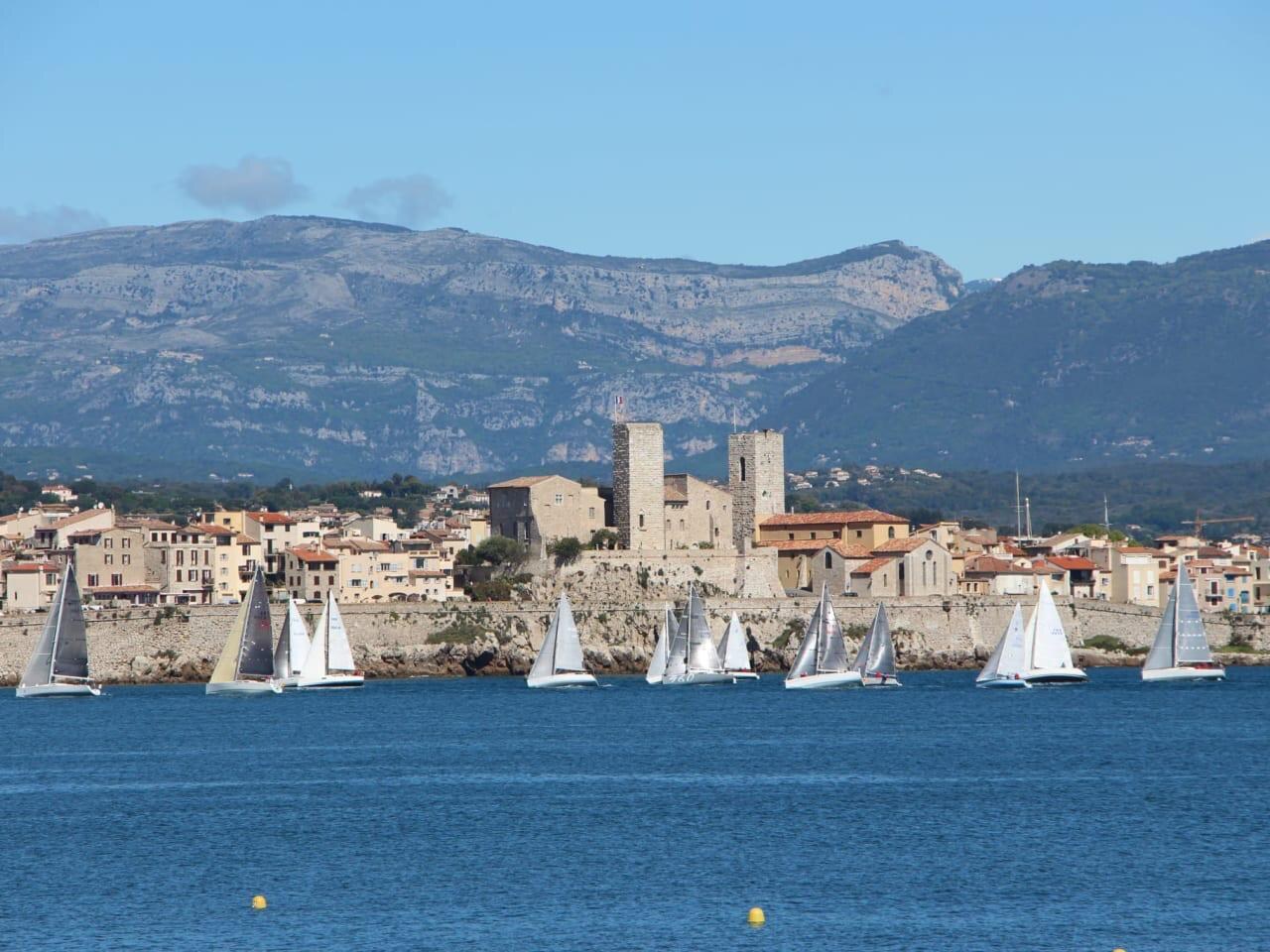
Old Antibes
Ten minutes from your apartment, the old town sits inside its ramparts. The Provençal market on cours Masséna runs every morning except Monday — fruit, cheese, socca, olive oil. Go on your first morning.
Just behind it, Château Grimaldi houses the Picasso Museum. The painter worked here in the autumn of 1946 and left part of what he made. The sea terrace alone is worth the visit.
And Port Vauban, Europe’s largest yacht harbour, can be walked all the way to Fort Carré.
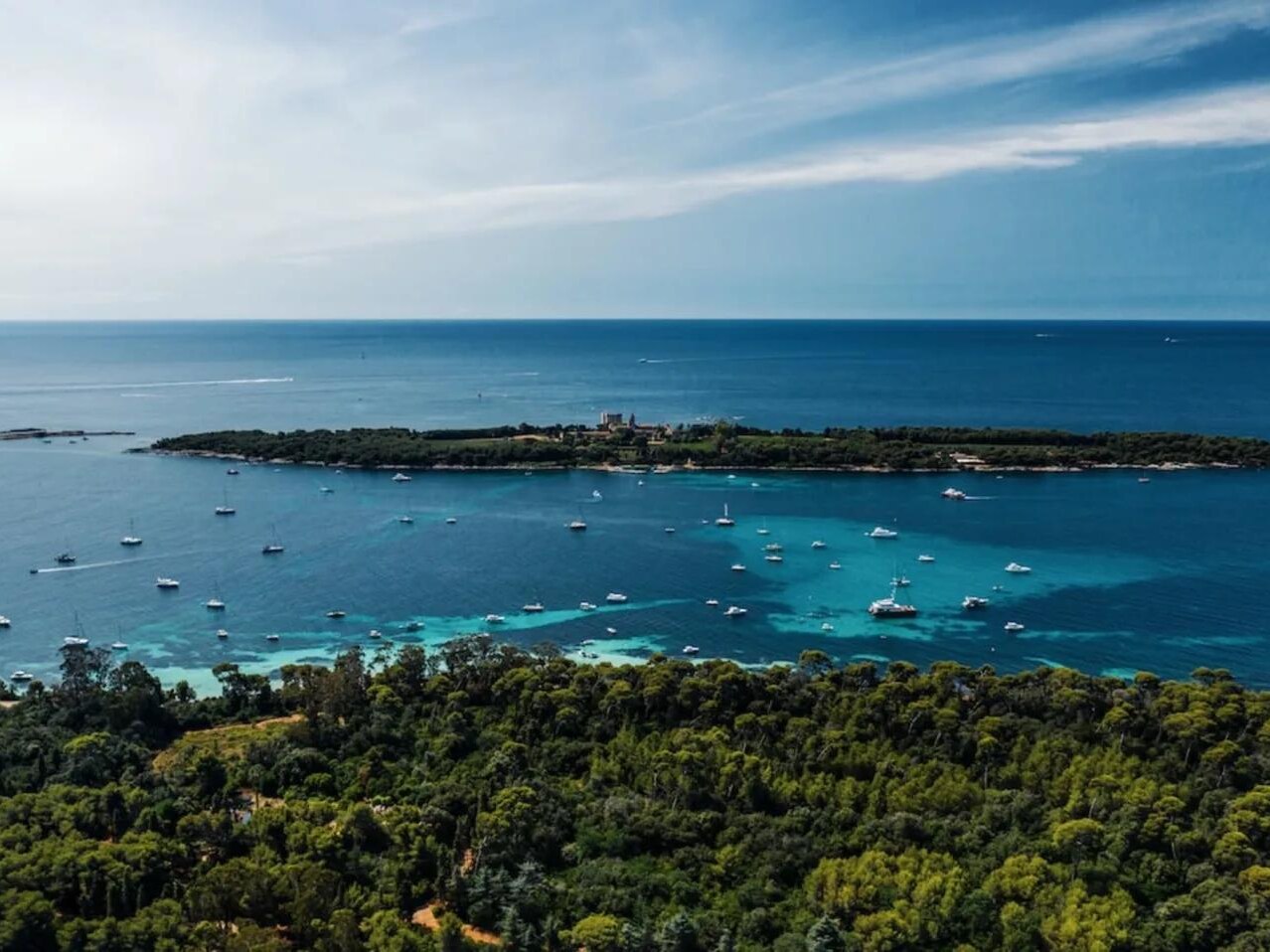
Cannes and the Lérins islands
Fifteen minutes by train from Juan-les-Pins, no changes. La Croisette for the walk, the Suquet quarter for its lanes and the view from the tower.
But the best part starts at the harbour: boats to the Lérins islands leave every hour. Sainte-Marguerite for its eucalyptus forest and coves, Saint-Honorat for the abbey and the monks’ wine. Allow a full day, and bring water — there is almost nothing on the islands.
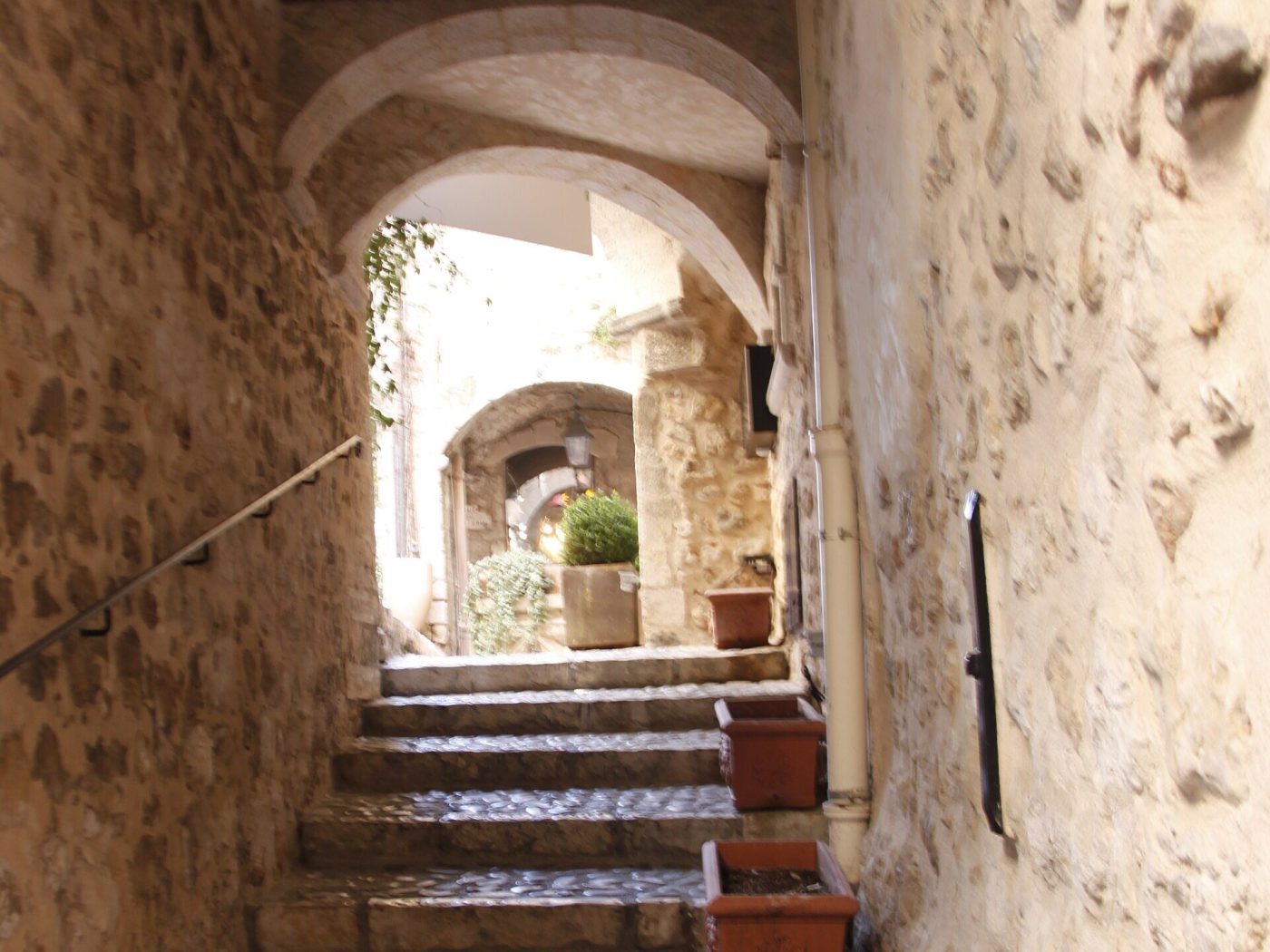
Saint-Paul-de-Vence
Half an hour inland by car. A fortified village you walk through lane by lane, past art galleries that have been there since the 1950s.
The Fondation Maeght, at the entrance to the village, holds one of France’s finest modern art collections — Giacometti, Miró, Chagall — in a building and garden designed around them.
Go late in the afternoon: the coaches leave, and the village grows quiet again.
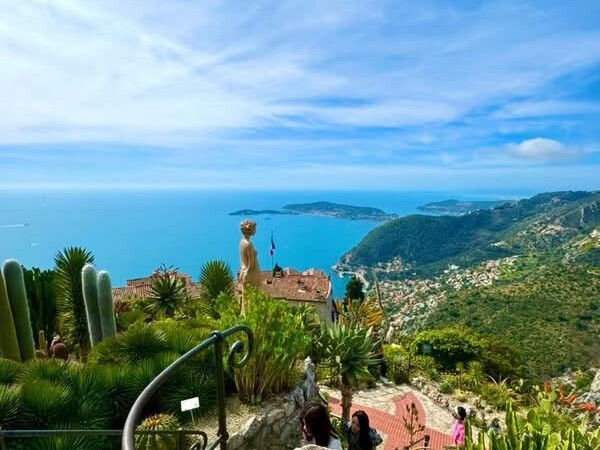
Èze, the hilltop village
Three quarters of an hour by car along the motorway, towards Monaco. The village clings to a rock four hundred metres above the sea.
You climb on foot, through stepped lanes too narrow for cars. At the very top, the exotic garden occupies the ruins of the castle: the view runs from Cap Ferrat to the Italian border.
The Nietzsche path drops back down to the sea in an hour and a half. It is steep and has no shade: go early, and take water.
Come late in the day. The coaches leave around five, and the village becomes another place entirely.
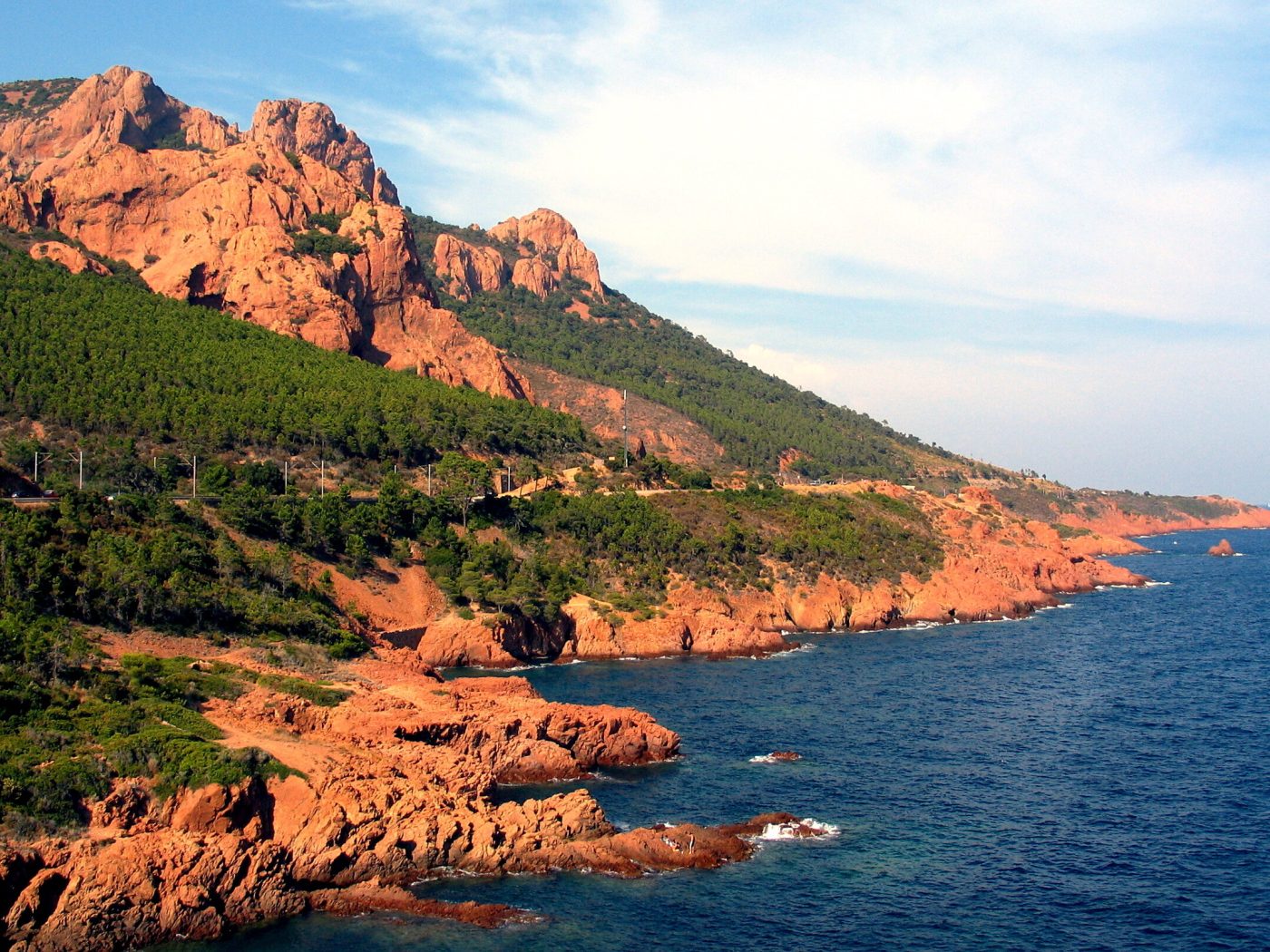
Théoule-sur-Mer and the Esterel
Half an hour along the coast, past Cannes. The landscape changes abruptly: the rock turns red, the Esterel drops into the sea, and cove follows cove.
It is the wildest place within this distance, and the most photogenic late in the day when the sun hits the rock.
Small beaches, a few restaurants at the water’s edge, and footpaths leading off from the shore.
The markets, day by day
There is a market almost every day, and rarely in the same place. The Provençal market on cours Masséna is the best known — fruit, cheese, socca, olive oil, under an 1881 hall. But the neighbourhood street markets are often cheaper, and the farmers’ market at la Garoupe, one Sunday a month, is where locals go.
| Market | Where | When |
|---|---|---|
| Provençal market | Cours Masséna, Antibes | Every morning except Monday out of season |
| Street market | Place De Gaulle, Antibes | Tuesday, Thursday, Saturday |
| Street market | Place Jean Aude, Antibes | Wednesday |
| Street market | Boulevard Albert 1er, Antibes | Thursday |
| Street market | Pont Dulys, Juan-les-Pins | Friday |
| Street market | Esplanade Championnet, Antibes | Sunday |
| Antiques market | Place Nationale, Antibes | Thursday and Saturday |
| Craft market | Cours Masséna, Antibes | Thursday to Sunday, in summer |
| Farmers’ market | Esplanade de la Garoupe | 3rd Sunday of the month |
| Night market | Promenade du Soleil, Juan-les-Pins | July and August |
| Night market | Pré-des-Pêcheurs, Antibes | July and August, 6 pm to 12.30 am |
Market days stay the same from year to year, but summer opening hours can change. If in doubt, the Antibes Juan-les-Pins tourist office keeps the official list up to date.